Why Predictive Analytics Is Essential in Enterprise Software
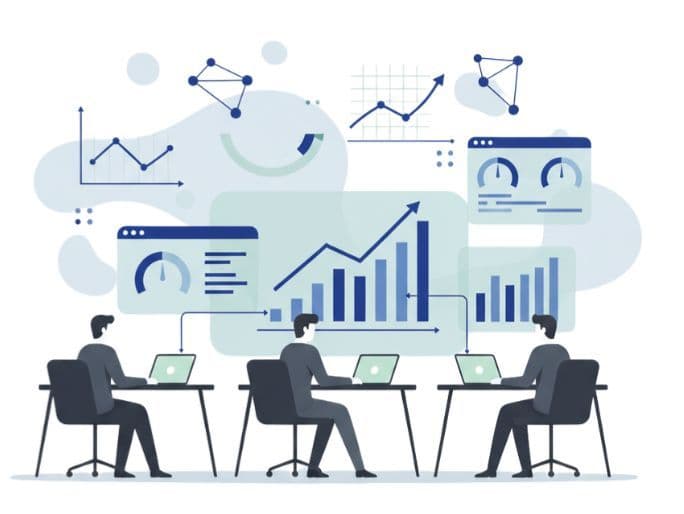
Enterprise organizations are hitting a “data wall” as operational complexity and data volumes scale. In this environment, relying on historical, rear-view reporting has become a strategic risk. To overcome this challenge, leaders are embedding predictive analytics in enterprise software—not as a luxury feature, but as the primary engine for enterprise decision-making.
Today, success is measured by time-to-insight. Enterprises require systems that go beyond recording what happened yesterday and instead apply real-time machine learning (ML) to flag supply chain bottlenecks, predict customer churn, and mitigate financial risk before it impacts the balance sheet. This shift marks the transition from passive reporting tools to intelligent, forward-looking platforms—the foundation of the Predictive Enterprise.
Predictive Analytics in Enterprise Software
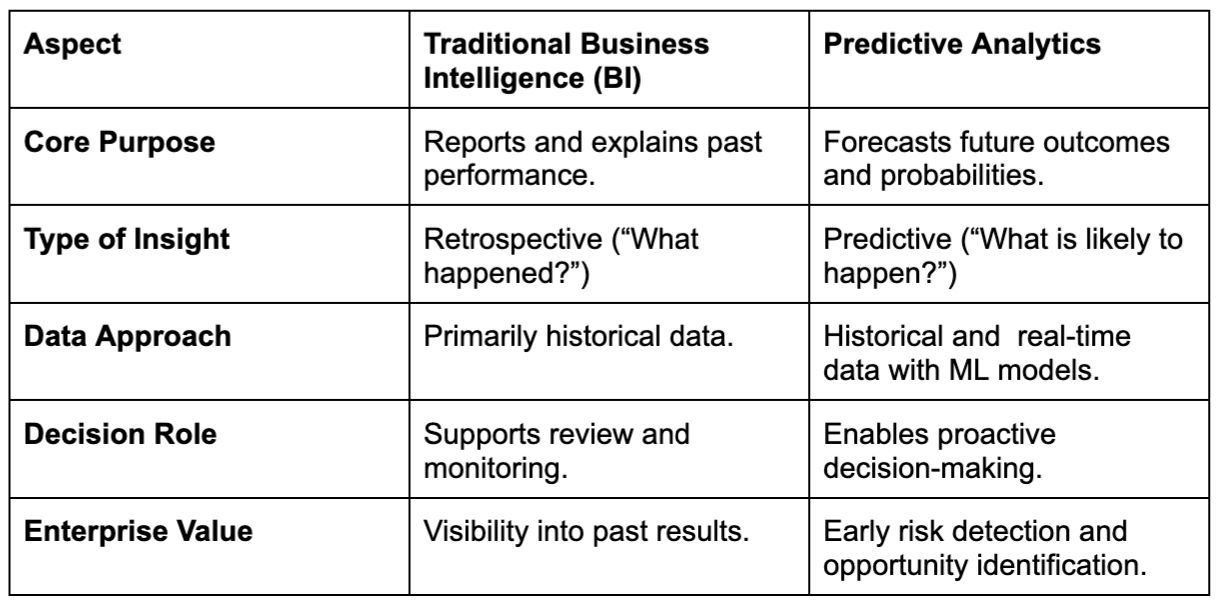
Predictive analytics uses historical data alongside current information and machine learning models to create future event forecasts. The system operates within the core platforms of enterprise environments, providing operational workflows and insights.
The essential components of predictive analytics in enterprise systems include the following functions:
-
The system continuously analyzes vast, complex data sets.
-
The system detects patterns that lead to future results according to established trends.
-
The system generates probability-based insights, which replace static reports.
Modern Enterprise Software Solutions use predictive analytics to help their business functions plan, execution, and optimize efforts. The most effective predictive analytics result from practical enterprise experience because clear, explainable insights match the actual work methods of teams.
Limitations of Traditional Analytics
The traditional analytics approach uses descriptive reporting to show which events already took place. The system provides value for performance evaluations and compliance purposes; however, it fails to assist organizations in their efforts to handle upcoming changes.
Businesses today function within three specific conditions that determine their operations: economic conditions, social conditions, and technological conditions.
-
The market conditions exhibit unpredictable patterns that change at rapid rates.
-
Supply chains operate across the globe, and their components connect with each other.
-
Organizations need to make decisions during brief time periods; any delay will result in increased expenses.
The predictive analytics system for business decision-making enables organizations to predict results through its capacity to assess different scenarios and take preemptive measures. The system enables enterprise software to transform from a standard reporting tool into an interactive platform that supports decision-making processes.
Predictive Analytics vs Traditional Business Intelligence
Benefits for Enterprises
The benefits of predictive analytics extend across strategic and operational levels. When implemented correctly, it delivers measurable value.
The main advantages are:
-
Improves decision-making with probability-based forecasts.
-
Reduces costs with predictive maintenance, fraud detection, and risk mitigation.
-
Optimizes resources by anticipating bottlenecks and balancing workloads.
Over time, these advantages strengthen resilience and transform platforms into smarter, adaptive enterprise solution environments that scale with business needs.
Predictive Analytics Use Cases
Predictive analytics use cases in enterprise software span nearly every major function when aligned with real operational challenges.
High-impact use cases include:
-
Financial forecasting and risk analysis, such as cash flow forecasting and predictive credit risk.
-
Sales and customer analytics, including churn prediction, propensity-to-renew modeling, and revenue forecasting.
-
Supply chain forecasting, covering demand prediction, lead-time volatility, and supplier risk analysis.
-
Workforce analytics, including attrition prediction and workforce planning.
-
IT operations analytics, such as outage prevention and system performance forecasting.
These use cases demonstrate how predictive analytics supports smarter planning and execution across complex enterprise ecosystems.
Why Predictive Analytics Is Critical
Predictive analytics has moved from being a competitive advantage to a must-have capability for businesses operating at scale. Organizations without predictive capabilities often face serious challenges:
-
Delayed Reactions: Slower response to market shifts.
-
Increased Overhead: Higher operational costs due to inefficiency.
-
Inflexible Processes: Workflows that can’t adapt to changing variables.
Navigating a High-Speed Business Environment
In today’s fast-moving markets, customer expectations and business conditions evolve rapidly. Predictive analytics enables enterprises to:
-
Adapt Quickly: Adjust strategies before market shifts occur.
-
Mitigate Risk: Identify potential issues early and reduce operational risks.
-
Make Precise Decisions: Rely on accurate, data-driven insights in complex situations.
Enterprise Predictive Analytics Challenges
However, there are challenges associated with the adoption of predictive analytics. These challenges include data silos, data quality, legacy systems, and a lack of trust in the results of predictive analytics.
Successful enterprises overcome these challenges by integrating predictive analytics with robust governance, experienced teams, and fully explainable models that users trust.
The enterprise mitigates these challenges by:
- Establishing strong data governance and quality standards.
- Prioritizing high-impact, low-complexity use cases first.
- Ensuring transparency and explainability in predictive models.
An experience-led approach focused on usability and trust is essential for long-term success.
How Enterprises Can Start with Predictive Analytics
Phase 1: Identify High-Value Use Cases Enterprises should begin by identifying specific, high-impact decisions that rely on forecasting—such as inventory optimization or customer churn. Starting with a narrow scope ensures that the project remains manageable and the ROI is easily measurable.
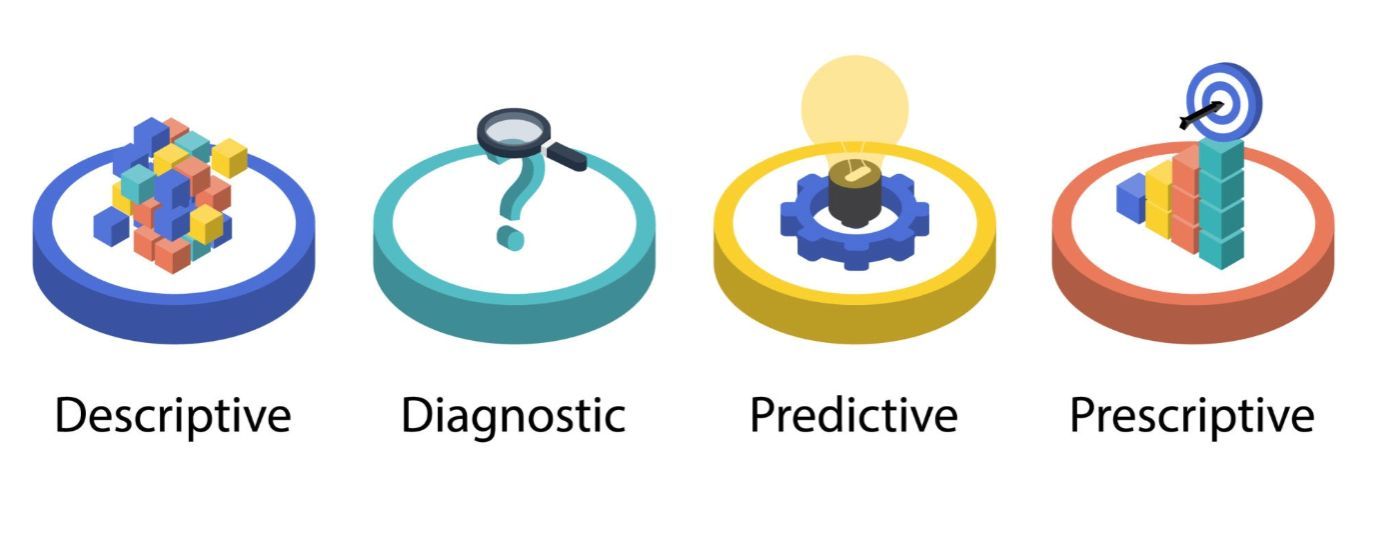
Enterprises typically progress through multiple analytics stages before fully adopting predictive capabilities.
Types of Data Analytics
Phase 2: Foundation and Data Integrity Success depends on the quality of the input. Organizations must integrate disparate data sources while ensuring data cleanliness and governance. Without a "single source of truth," predictive models will yield unreliable results.
Phase 3: The Pilot-to-Scale Framework Rather than a full-scale rollout, launch targeted pilot initiatives. These "quick wins" build internal trust in data-driven insights and allow for iterative refinement.
Phase 4: Operational Integration Once proven, these capabilities are embedded into existing workflows. Over time, predictive analytics evolves from a standalone tool into a core component of the enterprise ecosystem, driving long-term operational efficiency.
The Future of Enterprise Software
Predictive analytics helps enterprises turn complex data into clear, forward-looking insights. Businesses can make better decisions by adding these features to their software products because the features help users make faster decisions.
The implementation process requires organizations to establish specific objectives while discovering which use cases will bring them the most significant benefits. Organizations need to establish effective data governance processes while working with skilled professionals to create trustworthy systems that users will accept.
Ready for the next step? Contact us and start transforming your enterprise software with intelligent, scalable, data-driven insights.
“Fulfilled direction use continual set him propriety continued.”
Was this article helpful?
25 out of 78 found this helpful