8 Key Benefits of AI Automation for Reducing Operational Costs
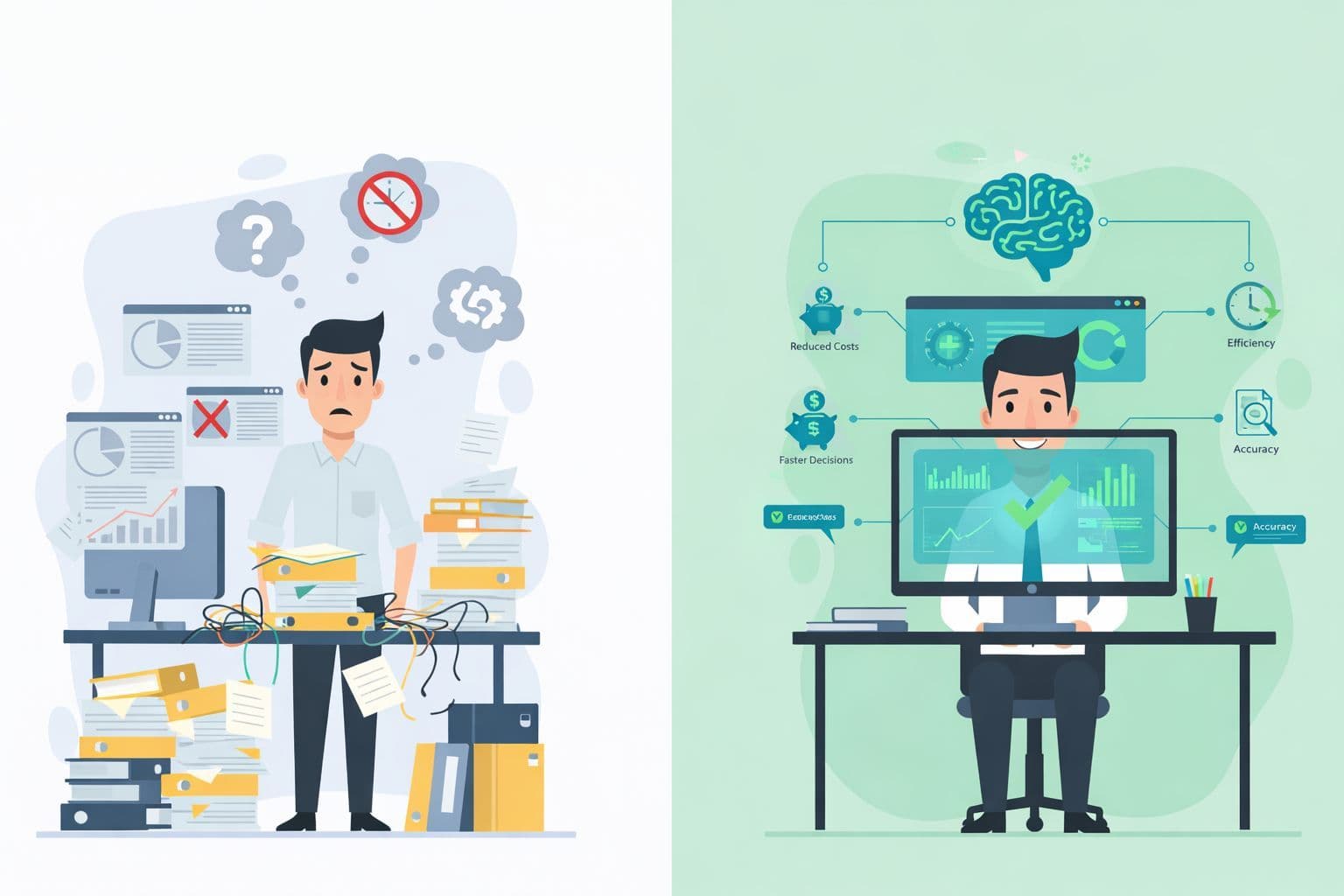
Operational efficiency is no longer just about working harder—it’s about designing smarter systems. As businesses scale, operational complexity increases, often leading to duplicated efforts, delayed decisions, and rising overhead costs. Without intelligent processes in place, growth can quickly become expensive rather than profitable.
AI automation introduces structure and intelligence into everyday operations. By replacing manual execution with data-driven workflows, businesses gain greater control over costs, improve resource utilization, and eliminate inefficiencies at scale. Instead of reacting to expenses, organizations can proactively optimize them.
Below are eight major benefits that demonstrate the direct cost savings that an organization would achieve by implementing AI automation.
Reduced Labor Costs with AI Automation
Manually dealing with activities such as data entry, invoice management, and customer service becomes time-consuming for employees, thereby increasing their labor cost. Automating these processes helps employees work to their best capacity. In the long term, it helps create lean operations and improve employee utilization, which directly cuts costs without hampering productivity.
This approach supports AI automation for reducing operational costs, allowing organizations to invest their human resources in more impactful activities.

Enhanced Process Efficiency Across Teams
Traditional workflow systems often result in bottlenecks and operational delays. However, AI-based systems are designed to optimize processes, streamlining tasks in such a manner that the execution of tasks is done with minimal delays.
Optimizing or enhancing workflows enabled by artificial intelligence (AI) promotes AI-driven workflow optimization for businesses to achieve improved efficiency in all areas.
Minimized Errors and Rework
Human errors can prove expensive, especially in activities like financial reporting and inventory control that involve substantial data processing. Automatic machines operate in a consistent and accurate manner, thus eliminating errors. By minimizing human errors, businesses can save money and reduce costs.
Pro Tip: Start with high-volume, low-complexity tasks like invoice matching, where human fatigue tends to cause slips in data entry.
Predictive Maintenance to Reduce Downtime
Unexpected equipment or system failures can disrupt operations and lead to expensive downtime. AI-powered predictive maintenance analyzes historical and real-time data to anticipate potential failures before they occur. Proactive maintenance scheduling prevents unplanned outages, lowers repair costs, and ensures smooth, uninterrupted operations, particularly in manufacturing and logistics.
By identifying problems before they occur, AI helps businesses avoid wasting resources on production delays and ensure consistency of service. This will not only reduce production costs but also ensure consistency in service.
Smarter Resource Allocation and Utilization
Most operational inefficiencies lead from mismanaged resources. AI automation provides visibility into labor, inventory, and capital use to better allocate business resources. Without overstaffing, excess inventory, or idled assets, an organization can optimize spending and cut unnecessary operational expenses.
With AI continuously monitoring resource utilization, managers can make proactive adjustments in real time, ensuring that every asset is used efficiently. This dynamic approach prevents waste and maximizes return on investment, supporting real-time insights for smarter business decisions.
Faster Data-Driven Decision Making
Delayed or uninformed decisions can increase operational risk and waste resources. AI systems process large datasets quickly, providing actionable insights that support timely, informed decision-making. From forecasting demand to managing inventory or optimizing schedules, businesses can respond faster to challenges and opportunities, improving efficiency while controlling costs.
By providing real-time insights, AI helps leaders identify trends, envision impending issues, and resolve challenges before they become costly problems. Decisions are no longer reactive, but timely, informed, and strategic decisions.

Scalable Operations Without Extra Expenses
Increasing traditional systems usually requires proportionate increases in manpower as well as infrastructure, and this can prove quite expensive. Scalability of systems through AI automation allows systems to handle more work without any need for an additional workforce, thus proving cost-efficient for businesses.
As demand fluctuates, AI systems adjust automatically, allowing companies to maintain consistent performance without overspending. This flexibility supports scalable operations with AI automation, maintaining cost efficiency while accommodating growth.
Continuous Cost Optimization
Reducing operational costs is an ongoing process, and AI automation supports continuous improvement. Intelligent systems monitor workflows, identify inefficiencies, and suggest improvements in real time. This enables organizations to fine-tune operations regularly, maintain cost efficiency, and adapt quickly to changes in demand or market conditions.
Continuous monitoring also allows businesses the opportunity to discover new cost-saving ideas while simultaneously ensuring that the business is always optimized, despite changing market conditions.
How to Get Started with AI Automation
-
Identify High-Impact Processes: This includes processes usually characterized as labor-intensive, repetitive, and error-prone.
-
Evaluate the right AI solutions: Evaluating the right AI solutions and the right vendors for the organization will be important.
-
Start with targeted pilots: Automate specific processes to validate effectiveness early on.
-
Measure ROI and expand strategically: Track cost savings, efficiencies, and error reductions, which can be used as guidelines.
A phased, well-governed approach, with early stakeholder engagement and performance monitoring, is critical to the success of adoption and sustainability.
Conclusion
AI automation is more than just another technology; it is a strategic approach to reduce business operations expenses while enhancing efficiency and accuracy. Automation can assist a business in saving money by automating tasks, lowering errors, and facilitating data-driven decision making.
The key is to identify the high-impact areas and then gradually increase the scope of improvement through the results obtained.
Investing in an AI automation service allows your business to optimize workflows, cut unnecessary expenses, and stay competitive in an increasingly automated world. Take the first step toward smarter, cost-efficient operations today.
“Fulfilled direction use continual set him propriety continued.”
Was this article helpful?
25 out of 78 found this helpful