Beginner’s Guide to SEO: How Search Engines Works
Most businesses invest in their websites, yet never reach the first page of search results. Without visibility, potential customers find competitors instead, and the effort invested in building an online presence delivers a limited return. In many cases, the issue is not effort or quality; it is a lack of understanding of how search engines evaluate and rank websites.
To understand why this happens, it is important to look at how search engines evaluate and prioritize web pages.
When someone types a query into Google, the search engine scans billions of pages to determine which ones best match the user's intent. This process happens in seconds, but behind it lies a structured system of crawling, indexing, and ranking.
Understanding how this system works is the foundation of effective Search Engine Optimization (SEO). Businesses that grasp these principles can build stronger visibility, attract qualified traffic, and compete more effectively in search results
What is Search Engine Optimization?
Search Engine Optimization (SEO) is the process of optimizing a website to improve its visibility in search engine results pages (SERPs). The main objective of SEO is to attract relevant, high-quality traffic through unpaid search results.
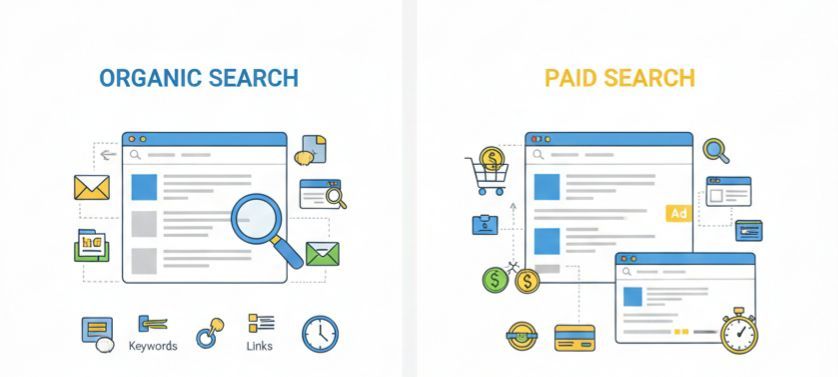
Organic vs. Paid Search
Organic Search
Organic traffic generated from different search engine optimization strategies, such as content development, keyword optimization, site improvements, and backlinks. No cost is needed for every single visit.
Paid Search
Traffic earned with the help of advertising campaigns in which companies pay to be shown in sponsored search engine listings. The point of being shown in search engines ceases to exist once the ad money is used up.
Example
When someone searches for a query, websites that appear in organic results rank because of effective SEO practices, while the listings at the top marked as sponsored appear through paid advertising.
Why SEO Is Important for Businesses
Search Engine Optimization is an important factor in helping businesses grow exponentially by connecting them with users who are looking for their or its products or services.
1. High search demand
Everyday, millions of searches are conducted by users on Google. SEO puts your business in front of people who are looking for solutions to the problems you help solve.
2. Intent-driven traffic
The target group is well-defined and consists of individuals looking to purchase, learn, and compare, which leads to better conversion rates and higher quality results.
3. Cost-effective marketing
Unlike paid ads, SEO delivers long-term results without paying for every click. Once your pages rank well, they can generate consistent traffic at a lower ongoing cost.
4. Build long-term visibility and trust
The websites that rank higher are usually seen as more credible and trustworthy as well. A well-executed search engine optimization can help create brand authority.
This is where structured search engine optimization services become essential, ensuring that content, technical elements, and authority signals align with search engine ranking factors.
How SEO Works?
SEO works to optimize your website so that search engines can find it, understand it, and then rank your pages. This will happen by developing relevant content, organizing your site for easy navigation, and ensuring technical elements like page speed and mobile-friendliness are in place.
When a user enters a search query, search engines analyze the keywords and the intent behind that search. Based on this information, they display the pages they believe are the most relevant and helpful from their index, considering factors like content quality, relevance, and authority.
Since search engines determine which pages appear for user searches, it is important to first understand what a search engine is and how a search engine works.
What Is A Search Engine?
Modern search platforms like Google use advanced algorithms to organize and rank billions of web pages. Instead of displaying random results, these systems evaluate relevance, authority, and technical signals to deliver the most useful answers to users.
When a query is entered in a search box, instead of displaying a collection of websites at random, a sophisticated algorithm is employed by a search engine to show the user more relevant information related to the user's query.
Gaining insight into how search engines function is the first step to successfully optimizing your site.
How Search Engines Work
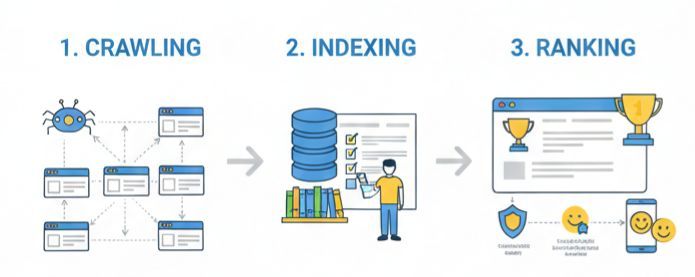
In order to function properly, search engines are made up of three major stages: crawling, indexing, and ranking.
1. Crawling
Crawling is the procedure by which search engines obtain new material. Crawlers, also known as spiders, browse websites; they locate new material by following hyperlinks.
For example, if you publish a new blog article, a crawler will visit it, examine the content, and transmit that information to the search engine. If you want to make certain that your crawling process works optimally, be sure that your site is set up correctly so that every page is submitted to the crawler.
2. Indexing
Once the crawling stage is complete, search engines can evaluate whether or not the page will be included in their database of web content. Indexation occurs once the search engines have assessed all of the elements on your site to determine the content type and subject matter.
Proper indexing is critical; no matter how excellent your content, if it is not indexed, it will not appear in search results.
3. Ranking
Ranking determines the order in which search engine results appear. To assess the relevance and authority of a page, search engines look at hundreds of different ranking factors. The most important factors include:
-
Content relevance: Is the content of the page relevant and does it effectively answer the user's search query?
-
Website authority: How credible and trustworthy is the website?
-
User experience: How fast does the website load, and does it work well on mobile devices?
Search engines want to present the best possible answers to users' queries; therefore, websites with high-quality, relevant content and a positive user experience are typically given higher rankings than other sites.
However, strong content alone does not guarantee visibility.
Many websites struggle not because their content is poor, but because search engines cannot properly crawl or index their pages. Technical issues, slow loading speeds, or poor site structure often prevent well-written pages from performing as expected in search results.
Types of SEO
While the core principles of SEO stay consistent, there are several specialized types of SEO that focus on different goals and platforms. Not every type will apply to every business, but understanding them helps you focus on the strategies that matter most for your situation.
1. E-commerce SEO
Ecommerce SEO is designed for ecommerce sites with the aim of increasing exposure and generating traffic for their product and category pages. The main aim is to generate traffic for the sites composed of customers who are likely to convert and result in more sales.
2. Local SEO
Local SEO, or search engine optimization, involves optimizing a website to target customers in that location. This helps companies rank on search engines so that customers can easily locate them when they search online and then pay them a visit. These are service-oriented or brick-and-mortar companies.
3. Video SEO
Video Search Engine Optimization, also known as Video SEO, is the process of optimizing the visibility of a video or a page related to a specific search result, which enables the appearance of a given video in the search results of Google, YouTube, and other platforms, consequently helping to expand the reach of the targeted audience.
4. News SEO
News SEO mainly targets publishers or media sites. Its application is focused mainly on news articles to be displayed prominently in Google News or the news section of the search engine results pages, in order to display new contents with proper visibility.
Key Factors That Influence SEO Ranking
The search engine rankings depend on various factors, which ultimately enable search engines to assess and evaluate the quality, relevance, and information contained on that site. However, paying attention to these key areas will enable one to rank higher on search engines.
1. Content quality & relevance
High-quality content created around user search intent is probably the most critical search engine ranking factor. Search engine algorithms favor content they believe is useful, accurate, and useful to its consumers.
2. Keyword usage
Keywords act like a helping hand for search engines to identify the content of your page, and using keywords appropriately does not harm readability.
3. Website authority (backlinks)
Backlinks act as trust signals. However, links from authoritative and contextually relevant websites carry significantly more ranking weight than a large volume of low-quality links. Quality and relevance matter far more than quantity.
4. User Experience
A positive user experience makes users want to spend more time on your sites. Mobile friendliness, navigability, and fast loading are also very important in ranking your sites.
5. Technical Performance
The technical aspects of site speed, crawlability, indexing, structured data, etc., guarantee that search engines can access your site quickly.
On-Page and Off-Page SEO
SEO is usually split into two main categories: the optimizations you make on your website and the signals your site earns across the web. Understanding both is key to creating a strong SEO strategy.
What is on-page SEO?
On-page refers to the optimization you make directly on your website to help search engines understand your content and rank it higher. On-page SEO includes using relevant keywords naturally in your titles, headings, and content so that search engines understand what your page is about. This includes writing clear title tags and meta descriptions, giving your content a proper structure with headings, creating clear and descriptive URLs, and ensuring your content is high-quality, engaging, and useful to users.
What is off-page SEO?
Off-page SEO, on the other hand, involves actions you take outside of your website to increase its authority, credibility, or ranking. Off-page SEO involves earning backlinks from reputable websites, which increases confidence in your content. It also involves social signals, such as shares or mentions on social media platforms, as well as guest posting for other websites or increasing online reviews or mentions of your website, which increases site credibility.
Technical SEO Basics
Technical SEO ensures that search engines can efficiently crawl, interpret, and index your content. Even high-quality pages may struggle to rank if technical barriers prevent proper access or understanding
1. Page speed
Faster loading pages help improve user satisfaction while decreasing the bounce rates. Search engines prefer sites with pages that organize well on all devices.
2. Mobile optimization
As most searches are conducted on devices such as mobile phones, a responsive website is important for high search engine rankings.
3. Site structure
A well-organized site structure helps search engines understand your content hierarchy and makes it easier for users to navigate your website.
4. Security (HTTPS)
HTTPS provides a secure gateway in protecting user data. Moreover, search engines trust secure websites, giving them priority over unsecure websites.
Measuring SEO Success
To ensure that your SEO efforts are effective, track your website's performance using key metrics such as:
-
Traffic: The number of visitors coming to your site.
-
Page Rankings: Check where your pages appear in the search results.
-
User Interaction: Time on page, bounce rate—see how visitors interact with your content.
-
Conversions: Track activities, for example, the number of sign-ups, purchases, or inquiries.
These metrics are easily watched, and your SEO strategy can be adjusted over time with tools like Google Analytics and Google Search Console.
Common SEO Mistakes to Avoid
The slightest of errors can bring your website to a standstill. The following are common pitfalls to be avoided:
-
Keyword stuffing: Too many keywords in a text make it difficult to read.
-
Ignoring mobile optimization: The majority of users now access the web on mobile, so it is imperative to make a website mobile-friendly.
-
Website Structure: Issues like poor interlinking of pages, poor page loading time, etc., can affect SEO.
-
Duplicated content: Instead of duplicating the same information from other sites, it will confuse search engines and reduce site authority.
Thus, by avoiding these mistakes, it becomes possible to lay a foundation for achieving success in SEO.
SEO Tips for Beginners
Starting SEO can seem overwhelming, but taking small, consistent steps can make a big difference.
1. Focus on Quality Content
Develop informative, original, and engaging content to answer questions from your audience. Content actually forms the backbone of SEO.
2. Optimize On-Page Elements
Use the given keywords effectively in the titles, descriptions, headers, and URLs. Also, ensure that the articles are easy to read and well-structured.
3. Track performance
Free tools like Google Search Console or Analytics allow you to monitor traffic, see what is working, and look for opportunities to do more.
4. Relationship building for backlinks
Leverage other websites within the same domain as yours to collaborate and create content worthy of citation. Such an approach helps to increase the overall credibility of the website.
5. Be consistent
Additionally, it is not a one-off exercise. A website requires ongoing work to show significance to search engines.
Final Thoughts
To effectively optimize your website for search engines (SEO), you need a clear understanding of how they work. The process by which a search engine 'crawls' a site, 'indexes' it, and then analyzes the data to provide rankings based on relevancy and authority are the key components that determine how visible a physical or digital asset will be relative to a search performed by a user.
When all of these aspects are working collaboratively, your website content will become easier for users to locate and, therefore, more valuable to them.
Businesses that want to build a structured and sustainable SEO strategy can benefit from structured support such as a data-driven SEO strategy for growing businesses, focused on long-term visibility rather than short-term tactics.
“Fulfilled direction use continual set him propriety continued.”
Was this article helpful?
25 out of 78 found this helpful

Related post:
- GEO Strategies to Improve Visibility in AI-Generated Search
- What to Consider When Choosing Cloud-Based Enterprise Software
- How to Choose the Right SEO Company for Your Business?
- Custom Software vs Off-the-Shelf Software: Which Is Better for Growing Businesses?
- How Companies Are Using AI Automation to Stay Competitive